WELCOME TO USA DAILY HOT SEARCHES

WE COLLECT DAILY HOT SEARCHES IN UNITED STATES

USA DAILY HOT SEARCHES

YOU WILL FIND HERE WHAT THE US SEARCHING FOR

Showing posts with label education. Show all posts

Friday, October 26, 2012

Florida minority students: Highest SAT scores, lower standards?

Related searches: sat scores


Florida minority students: Highest SAT scores, lower standards?

Minority students, especially Hispanic seniors, have the highest SAT scores in the nation. (Shutterstock photo)

Minority students in their last year of high school in Florida have the highest SAT testing scores in the nation, according to a recent report from the state College Board. Overall, Florida Hispanic high school seniors outperformed other minority students across the nation in areas of writing, mathematics and reading, scoring 29 points higher than the nation in critical reading; 13 points higher in math; and 20 points higher in writing.

The Famuan reports a number of Florida education initiatives have helped provide educational opportunities to minorities in the state, often offering free college education for well-performing students.

Minority students and low performance benchmarks
With minority students, especially Hispanics, performing so well on standardized testing, concerns continue to circulate regarding the recent proposed changes for Florida performance benchmarks.

According to a new strategic plan purposed by the Florida State Board of Education, new education benchmarks would be implemented based on race and ethnicity. The plan would set higher performance benchmarks for Non-Hispanic white students and Asian-American students and lower benchmarks for Hispanic, Native American and African-American students.

The fact that minority students are surpassing others in the realm of performance may support critics’ views on this new education plan. A number of organizations have spoken out against the strategic plan calling it discriminatory, and high ranking political figures have also spoken out against the purposed plan.

Senator René García, Chairman for the Florida Hispanic Caucus, said in a recent letter to the Education Board, “The Florida Hispanic Caucus has been supporting legislation that raises the bar for all public school students and ensures academic proficiency regardless of race or gender.”

“We would just like to ensure, as duly elected representatives of Hispanics, that those (new performance) benchmarks are not tied to race or ethnicity,” he said.

Senator García’s sentiments are shared by Governor Rick Scott who released a statement saying, “The standards set by the State Board must clearly and sincerely acknowledge that all students are capable of performing at grade level regardless of their race or background and that our ultimate goal is to ensure there is no achievement gap in Florida’s education system.”

He added, “With this in mind, I would ask the board to more completely incorporate this recognition into its strategic plan so that we can focus our efforts on helping every student to achieve the highest level of success.”

Dominique Moody, correspondent to the Famuan, believes “Florida’s high school graduates are raising the bar, and with a plurality of them choosing to attend a state university, Florida can expect to see a raise in the state’s economy in upcoming years.”


Source : VOXXI - http://www.voxxi.com

Thursday, October 25, 2012

New College Board Head Makes Underserved Top Priority

Related searches: College Board

New College Board Head Makes Underserved Top Priority

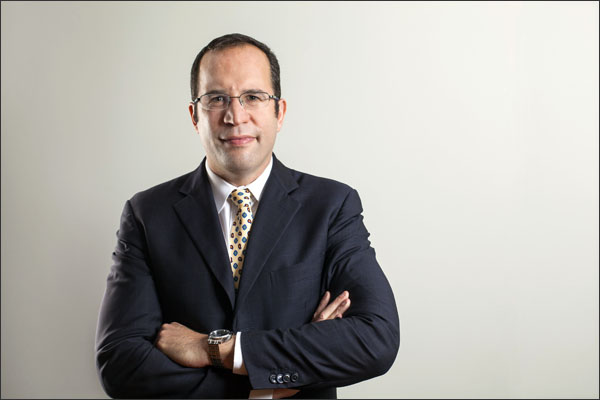
College Board President David Coleman poses for a portrait last month in New York.
—Michael Nagle/College Board


The new president of the College Board launched his tenure yesterday with a call to use the organization’s clout to help historically underserved students reach their potential and find ways for all students to immerse themselves in academic “work worth doing.”
David Coleman’s keynote speech at the organization’s annual conference here laid out a social-justice agenda that focuses on closing the race- and income-based score gaps that dog the SAT and Advanced Placement exams and on helping disadvantaged students get access to challenging academic work and find their way to college.
Under the 13-year tenure of Mr. Coleman’s predecessor, Gaston Caperton, the New York City-based nonprofit organization built its business muscle and pushed the reach of its signature programs to a more diverse array of students.
But even as those programs have encouraged more students to try new challenges, scores have flattened as the test pool has grown to include less-elite students, often with weaker academic preparation. Troubling gaps in access to the AP program remain.
Mr. Coleman, who took over as president on Oct. 15, said he wants the College Board to consider all students who take its courses and tests to be “within our care” and find ways to provide supports that help even the least-well-prepared take on challenges and do well.
“While some excuse that decline [in SAT scores] on the basis that more diverse students are taking the test, I believe we cannot take comfort in that explanation,” said Mr. Coleman, who is known nationally as one of the chief architects of the Common Core State Standards in English/language arts, which have been adopted by all but four states.
“If we are to be internationally competitive and achieve the values of this country, we must improve performance and diversity.”
Minority Underrepresentation
Mr. Coleman quantified his frustration by listing data points that show the stubborn gaps and problems. Eighth grade reading scores on the National Assessment of Educational Progress have been essentially flat for four decades, he noted. SAT scores, especially in reading, are declining, and minority students are underrepresented among the highest scoring.
In 1994, one of every 150 African-American students who took the SAT scored in the top 5 percent, a number that has only worsened in 2012, to one out of every 189, he said. Latinos fare only marginally better: In 1994, one of every 65 Latino students who took the college-entrance exam scored in the top 5 percent. Today, it’s one of every 87.
One in every 18 white students and one in every seven Asian students, by contrast, score in the top 5 percent.
Mr. Coleman cited a new College Board study of “undermatching,” in which many students—especially those from low-income families—choose less-selective colleges than they are qualified for. Since completion rates tend to be better at more-selective colleges, undermatching puts students at risk of not finishing college.
He pointed to data showing that low-income students who do well on the PSAT—and thus show “AP potential”—often don’t take those college-level courses. Other research, he said, shows that many students who score well on the SAT don’t enroll in college.
The remedy for the “national tragedy” of achievement gaps at the top performance levels, and the other underachievement dynamics, aren’t yet clear, Mr. Coleman said, but they are top priority on his watch.
One way he hopes to drive change is by sparking more inquiry into the dynamics behind the problems. The College Board does its own research, but it is on the brink of being able to provide its troves of data to researchers more easily and free of charge, he said.
He called on everyone in the broad College Board network who interacts with students—AP teachers, guidance counselors, financial-aid personnel, college-admissions officers—to play a part in “connecting students with opportunities.” He floated the idea of using AP “alumni” as peer counselors, reaching back to current students to urge them to take on the challenge.
‘Work Worth Doing’
Mr. Coleman proposed that the guiding idea behind all the work of the College Board—and the 6,000 colleges, college systems, schools, and districts that are its members—should be connecting students with “rigorous work worth doing.” The phrase appeared 19 times in his hourlong address.
His vision for such work is that it focuses deeply on “what matters most” and encompasses all disciplines, not just mathematics and English/language arts. It makes students truly ready for good jobs and higher education. And it is for all students, he said, sparking applause from the audience of about 2,000.
“It is the only work that can accelerate students when they are behind,” Mr. Coleman said. “I believe excellence is the most democratic idea there is; that is, only by demanding excellence of all can we hope for equity.”
Mr. Coleman did not define “work worth doing,” but tidbits in his remarks suggested that it would reflect the priorities of the common standards. Those guidelines emphasize deep focus on a few key ideas in math, and have sparked debate for not requiring all students to reach key milestones—such as completing Algebra 1 by 8th grade. The language arts standards emphasize reading more informational text and drawing on evidence in text to build argument, sparking fears in some quarters that the reading and writing of fiction could diminish in classrooms.
The College Board’s role in contributing to “work worth doing” is multipronged, according to its new president. It can work to ensure broad access to rigorous coursework like Advanced Placement and think about how similar challenges—at scale—can be brought to earlier grades.
He wants the organization to figure out new ways to offer support to students as they undertake those challenges. Maybe, he suggested, retiring AP teachers can harness technology to serve as tutors for low-income students.
The College Board must also “realign” its own assessments to reflect the goal of work worth doing by making exams worthy learning activities unto themselves, Mr. Coleman said.
“The College Board must take responsibility for the practice that our assessment inspires,” he said.
One way to do that, he said, would be to rework the writing portion of the SAT so that students are graded not only on their writing skills, but on the accuracy of the evidence and examples they are asked to provide as part of that writing. That would reflect a value on analysis, precision, and accuracy, which matter very much in college and work, he said. Another way to do that would be to emphasize academic vocabulary commonly found in complex texts, rather than endless lists of words most students “will never see again.”
Those remarks echoed the goal Mr. Coleman stated in an Education Week interview in May, when he first accepted the College Board job: aligning the SAT to reflect the common standards. ("Incoming College Board Head Wants SAT to Reflect Common Core," May 16, 2012.)
Bolstering the goal of work worth doing involves not only coursework, student supports, and assessment, but also the college-admissions process, Mr. Coleman said. Even the work students do to gain admittance should be pursuits that reflect what we most want them to know, he said.
Typically, students write a personal essay as part of their admissions package, and such narratives or opinions have come to dominate the high school writing-assignment landscape as well, Mr. Coleman said. But what is most valuable in college and work, he said, is writing that puts forth arguments backed up by evidence and details.
Perhaps the College Board, he suggested, could work with its higher education members to see that an analytic essay accompanies college applications alongside the personal narrative, to show off students’ skill in using evidence to build argument. “That would be work worth doing, and practicing,” he said.
Supporting work worth doing also involves finding new ways to support students as they complete college, Mr. Coleman said.
'Radical' Concepts?
At a celebration after the speech, College Board members had a range of reactions to Mr. Coleman’s ideas. Jonathan Wehner, the director of recruitment at Case Western Reserve University, in Cleveland, said aspects of the speech were “pretty radical,” but he welcomed the new president’s general direction.

Audrey Y. Smith, the associate vice president for enrollment at Smith College, in Northhampton, Mass., said she viewed Mr. Coleman’s remarks as a welcome return to the organization’s core mission after years of building itself as a business. “We’re about realizing the academic potential of all students,” she said.
The challenge of realizing his vision, however, tempered optimism in some quarters. One teacher, who declined to give her name because she didn’t want to be seen as unsupportive of the new president’s goals, said she spends her days trying to help AP students who enter her class with weak skills.
“It’s just so hard to fix parts of a system that aren’t under your control,” she said. “Every day I wish I could wave a wand and have every one of them come in ready for AP. But that isn’t reality.”


Source : Education Week News - http://www.edweek.org

College Board study: Year in college now averages $17,860

Related searches: College Board

College Board study: Year in college now averages $17,860

The sticker price of in-state tuition at four-year public universities climbed about $400 this fall, an increase of nearly 5 percent that brought the average to $8,655. That's a modest increase compared to recent years but still painful for families with stagnant incomes after a prolonged economic slump.
Room-and-board charges grew by a comparable amount, raising the full cost for students living on campus to $17,860.
The latest annual figures from the College Board, out Wednesday, show only about one-third of full-time students pay that published price. The estimated net price -- what students pay on average after accounting for grants and tax credits -- remains considerably lower than the list price: about $2,910 for tuition at public four-year universities, and $12,110 including room and board.
But after several years when a wave of student aid from Washington held net prices mostly in check, real costs for students have now jumped two straight years, as that wave washes back from its high-water mark.
At private colleges, enrolling about one-quarter of four-year college students, list prices remained substantially higher: $39,518 on average, including room and board. During the previous three years, net prices at private colleges had declined. But this year net tuition and fees increased about $780. Including room and board, but factoring in aid, the typical student at a private college is paying $23,840.
At public two-year

colleges, tuition and fees increased $172 to $2,959. On average, those costs are entirely covered by aid.
Altogether, the latest figures send mixed signals. They highlight that higher education, while increasingly essential economically, is devouring an ever-increasing share of family incomes, which are lower than a decade ago. But the numbers could also signal an inflection point where several unsustainable trends in costs, borrowing, and student aid at last begin to break, though it's too soon to say for sure, said report co-author Sandy Baum of the College Board and George Washington University.
Prices were up this year, though at barely half the rate of the past two years. Enrollment, after surging nationally for several years after the economy collapsed in 2008, has leveled off. Partly as a result, federal aid is also now declining slightly after several years of double-digit increases.
Even student borrowing, the source of much anxiety, declined last year by about 4 percent. Borrowing remained 24 percent higher than five years earlier, but the annual decline was the first in at least two decades.
Explanations could include debt aversion, more parents employed, or simply a decline in enrollment overall, particularly at for-profit colleges, where students typically borrow more than at other types of school.
"It's not that college is cheaper," Baum said. "It could be parents' savings have come back a little so they're able to help. It could be that they're hesitant to borrow."
The figures come as the two presidential candidates regularly lament the rising costs of college, with President Barack Obama boasting that the broad expansion of federal student aid during his term has helped cushion the blow from sharp funding cuts from the states. His Republican challenger, former Massachusetts governor Mitt Romney, argues increased aid from Washington has encouraged colleges to charge more.
The report largely blames state cuts for rising tuition, highlighting historical data showing tuition jumps most when states support falls. According to the College Board -- a not-for-profit membership group that promotes college access and owns the SAT exam -- state funding per student to higher education has now declined four straight years, and is down 26 percent over the last five.
Major shifts in the economics of higher education, with costs shifting from the states to families and the federal government, are on display across the country, though perhaps nowhere more vividly than in places like the California State University system, which educates 427,000 students. CSU, which saw state cuts of $750 million this year alone, has said it will have to increase tuition again as soon as this winter if a state ballot initiative that would provide more funding fails to pass on Nov. 6.
"We tell them if you don't vote you're literally going to be voting for a tuition increase," said Pedro Ramirez, a graduate student at Cal State-Long Beach who is working to rally student support for the ballot measure. He says he managed to finish his undergraduate degree from another CSU campus in Fresno last year without student loans -- but not without credit card debt.
Cal State-Long Beach's tuition of $6,800 is below the national average, which helps explain why it got 78,000 applications last year, said President King Alexander. But prices are $2,000 higher than two years ago, only partly offsetting cuts of $4,000 per student from the state, and have hit low-income students hard (the CSU system is the nation's largest recipient of Pell Grants, which go mostly to students from families earning under $40,000).
The effects of rising tuition aren't always as straightforward as students hitting an unaffordable price point and giving up, though that happens, Alexander said. Rather, it's a more complex and destructive process. Fewer faculty means long wait lists for classes, keeping students from progressing. Students, meanwhile, spend more time at jobs and less time studying.
"You're seeing less students drop out because the aid is available, but you're seeing more students working, which also has the impact of slowing them down," Alexander said. "That really isn't good for society, because they should be done, and they're taking up extra slots."
Alexander said if current trends continue, states are on track to stop funding higher education entirely as soon as 2020. But he also says others aren't blameless -- parents who assume colleges that don't charge much can't be very good, and colleges, particularly private ones, that have raised prices to increase their prestige, casting affordability concerns aside. According to the Chronicle of Higher Education, at least 123 colleges charge more than $50,000 per year in combined tuition, fees, room and board.
"There are good payers, institutions, who've done a good job keeping it lower than most, and there are bad guys in this who haven't paid any attention to this whatsoever," Alexander said.
Among other findings in the College Board's latest report:
--New Hampshire and Vermont have the highest published in-state tuition charges, at around $14,000 each. Wyoming has the lowest at $4,287, followed by Utah at $5,595.
--The College Board's figures are comparable to other recent reports on rising student debt: About 57 percent of 2010-2011 bachelor's degree recipients graduated with debt, which averaged $23,800 (another report last week calculated figures about $3,000 higher). Of students who entered college in 2003-2004, only about 2 percent had more than $50,000 in debt in 2009. Two-thirds of all students who entered that year had less than $10,000.
--The percentage increases in costs at four-year public colleges have declined each of the last four years, but continue to race ahead of overall inflation -- up 27 percent beyond inflation in the five years since 2007, compared to a 31 percent increase over the five years before that.


Source : San Jose Mercury News - http://www.mercurynews.com